


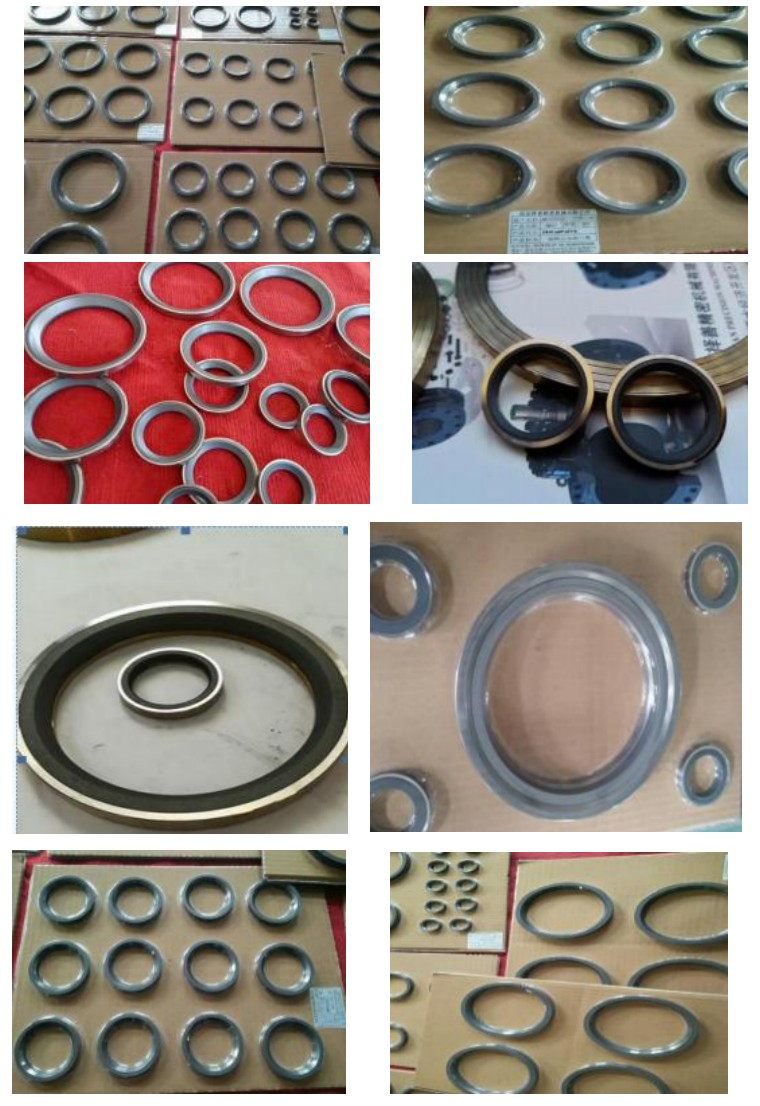
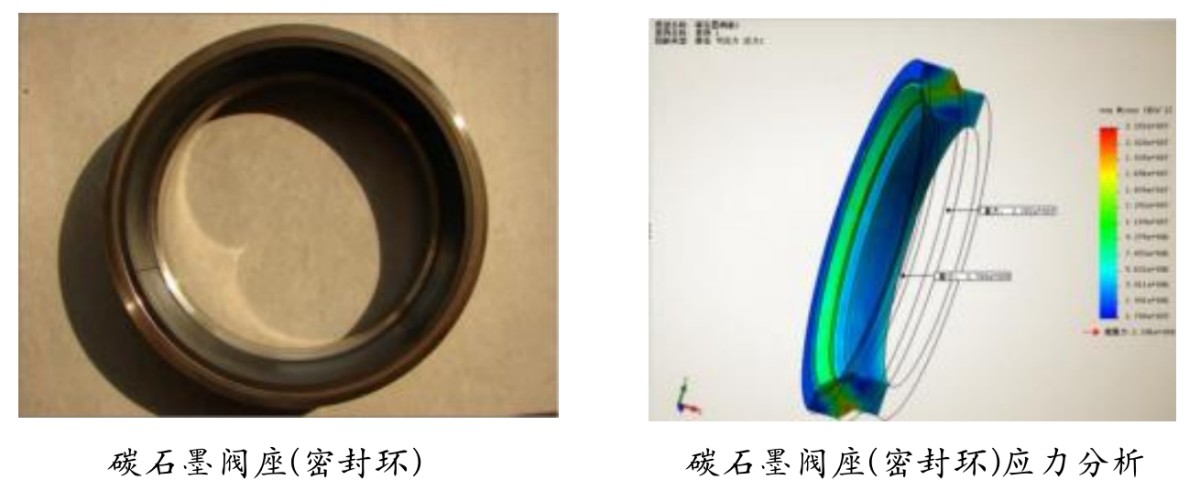
Our company currently offers the following carbon graphite sealing ring materials: antimony-alloy-impregnated carbon graphite, resin-impregnated graphite sealing rings, and high-purity graphite sealing rings.
Carbon graphite performance parameters
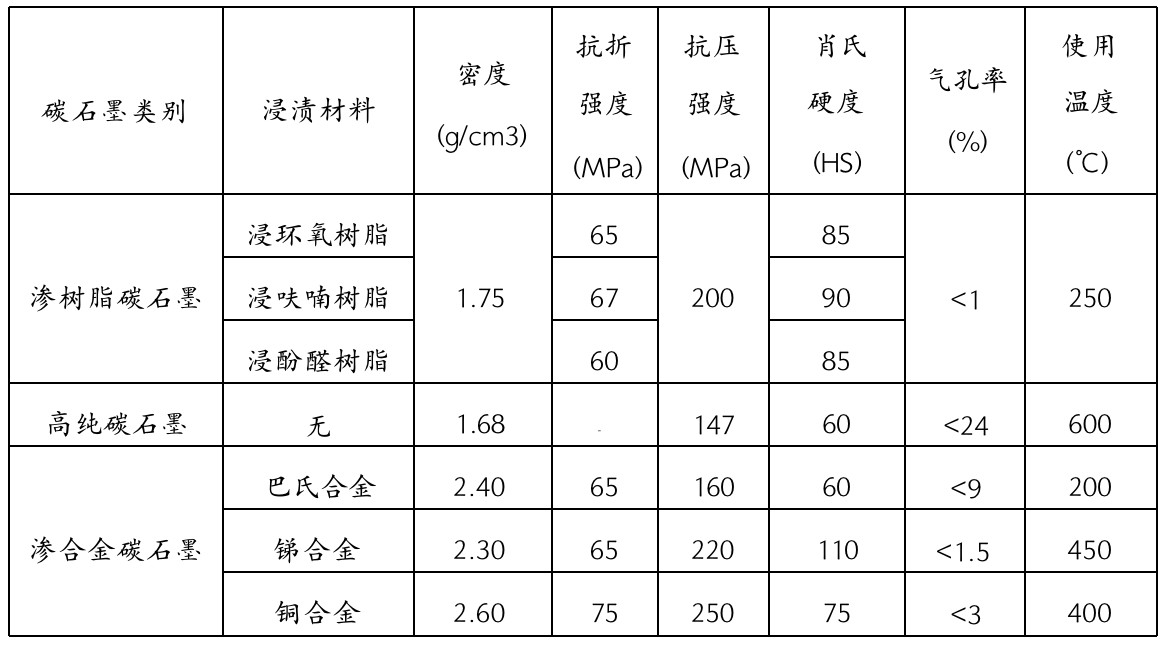
Performance description of antimony-alloy-impregnated carbon graphite
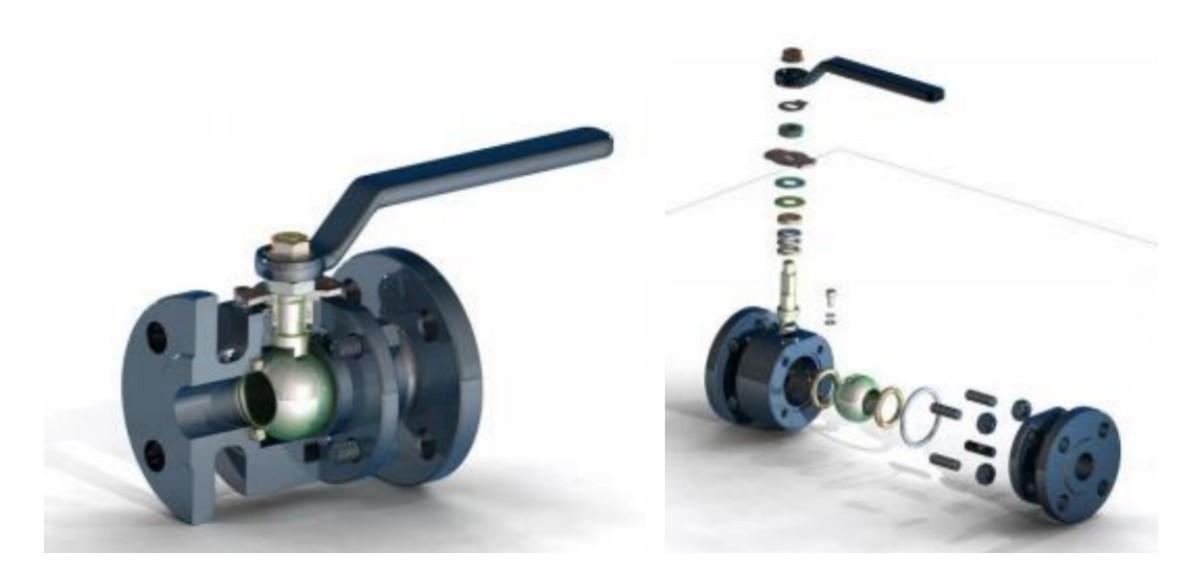
1. At both room temperature and high temperatures of 450℃, the antimony-alloy-impregnated carbon graphite sealing ring itself is impermeable, the valve seat strength is sufficient, and zero leakage can be achieved between the sealing ring and the ball sealing surface.
2. The floating ball valve with carbon graphite sealing rings can achieve zero leakage at room temperature; at a high temperature of 400℃, the leakage rate is controlled within 1~2ml/min, meeting the API598 standard; after returning from high temperature to room temperature, the leakage rate remains within 16ml/min, meeting the ISO5208 leakage standard.
3. The operating torque of the floating ball valve with carbon graphite sealing rings under pressure is low (compared with metal hard sealing: 650N.M), and the maximum torque under high temperature and high pressure is 400N.M.
4. After life testing of the floating ball valve with carbon graphite sealing rings at room temperature and high temperatures of 300℃ and 450℃ (100 cycles)
there is no obvious scoring on the ball and carbon graphite valve seat sealing surfaces, and the sealing and operating performance remains good.
Conclusions drawn through extensive testing, analysis, and comparison
1) Resin-impregnated and babbitt-alloy-impregnated carbon graphite have low porosity and good density, and can achieve zero leakage below 200℃, but cannot meet the requirements at 400℃. At high temperatures, the graphite sealing ring (valve seat) itself may fracture.
2) High-purity carbon graphite has excellent high-temperature performance and can meet the requirements at 400℃, but it has high porosity and poor density, and cannot meet the gas-tight sealing requirements at either room temperature or high temperatures.
3) Copper-alloy-impregnated carbon graphite has low porosity and good density, and can also meet the requirements at 400℃. However, because copper has a high melting point (up to 1083℃), the impregnation process is difficult, resulting in high costs.
4) Antimony-alloy-impregnated carbon graphite has low porosity, good density, and relatively good high-temperature performance, and can meet the requirements at 450℃. Antimony has a relatively low melting point (approximately 630.5℃), the impregnation process is not highly difficult, and the cost is low.
Methods and requirements for lapping the carbon graphite valve seat and ball sealing surfaces
1) Rough grinding: Use 800-grit abrasive paper secured with double-sided adhesive tape on the ball sealing band, and manually rotate the graphite valve seat for matching lapping. After approximately 23 minutes of rotational lapping, when graphite powder is observed falling off, wipe the valve seat sealing surface clean with a paper towel and inspect the grinding marks. If the grinding marks are even over the entire circumferential sealing surface, precision lapping can begin; if the grinding marks on the sealing surface are uneven due to deformation caused by clamping and machining the valve seat, continue the matching lapping. 2) Precision grinding: Apply W3.5 lapping compound evenly to the surface of the ball sealing band, and manually rotate the graphite valve seat for matching lapping. After approximately 5 minutes of rotational lapping, clean the surfaces and then conduct a pressureless test. If there is no visible leakage after 5 minutes, the result is acceptable (a slight water line around the circumference is also acceptable). 3) After the sealing surface of the integral valve seat has been match-lapped, the stepped surface at the rear of the valve seat must also be ground. Secure 800-grit abrasive paper on a flat plate, and manually rotate the stepped surface at the rear of the graphite valve seat against the abrasive paper for matching lapping. The process is complete as long as the grinding marks are even across the entire stepped surface.
Related Recommendations